André Oliveira
Founder of Pixelmatters on AI, careers, and what stays human.

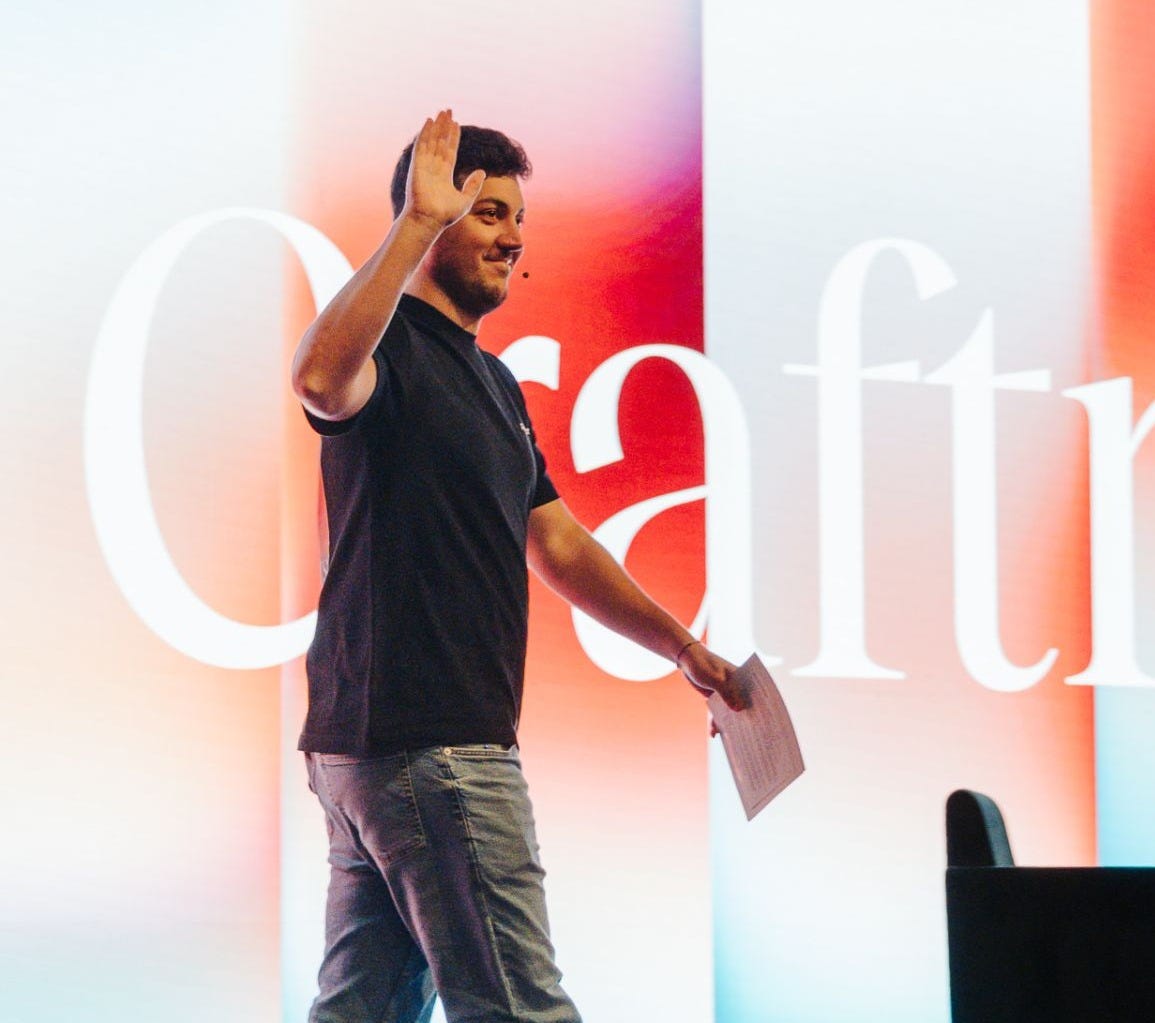
He built one of Portugal’s best-known product studios, ran it for twelve years, and stepped back from the CEO seat just as AI started rewriting his industry. We talked about what comes after.
André Oliveira founded Pixelmatters, a digital product studio in Porto, twelve and a half years ago. A few months ago he handed the company to a new CEO, Bruno Teixeira, and took the title of Chairman. He also runs the Upside Club, a community for Portuguese founders, and writes angel checks. In the Portuguese tech ecosystem, his is a name people recognise.
Which makes the timing of our conversation interesting. He stepped back from running a studio at the exact moment AI started tearing through the economics of studios and businesses in general. I wanted to know what that looks like from one step away.
How’s life as a Chairman instead of a Founder?
The first thing he wanted to clear up is that he hasn’t gone anywhere. “I’ve been getting a lot of jokes, not only about the nomenclature of the role, but the fact that people think I’m now retired. Which is definitely not the case.”
His reason for stepping back wasn’t AI or strategy. It was something founders don’t usually like to admit. “After you do the same thing for a while, you eventually get a bit tired of it. I think that’s kind of normal. And human. I just felt it would be good to hand over the reins to someone who could maybe do an even better job than I did, which I feel strongly will be the case.”
He calls this period a phase of reflection. Twelve years of momentum, deliberately paused.
Pixelmatters is becoming an AI-native studio. What does that mean internally?
I first heard about this through LinkedIn and given all the noise around AI, I struggled to understand what an AI-native studio does. I found out that it wasn’t his call, it was Bruno’s, but he sees it as inevitable. “The latest models are profoundly impacting the way we all work. It’s something we need to do to continue to be competitive.”
I found his path to becoming AI-native something that businesses can learn from. AI can’t just be a tool or a department. “It needs to be something across the board, horizontally: process, culture, people, training, how people are evaluated and everything in between.” AI has to impact everything in the business.
How are clients different, before AI and now?
Less than you’d think, he says. “The reason clients hire us hasn’t really changed. They want a tech partner they can trust for the long haul. Quality, culture, work ethic, those are first principles that haven’t gone away.”
What’s different is what arrives in the inbox. “As I usually say: briefs are gone. Now we just get prototypes.”
People build things themselves now, on Lovable, v0, Replit and then hit a wall. “They reach a point where they need professional help. Whether because of the lack of technical skills, or because that product is being used and now it’s becoming a business, and they need to professionalize it.”
He doesn’t read any of this as the end of his industry. He’s a big advocate of the Jevons Paradox for AI: “A huge revolution like AI will destroy a lot of jobs. But the force is so big that it will create many more things for people to do in this new economy. You start to see people hiring for roles just to manage agents.”
You were unemployed for two years around 2008. How does someone in that position break in today?
He rejected the premise that the door has closed. “I’m definitely not the type of guy who thinks there’s no more space for juniors. I’m totally against that perspective.”
Then he reached for football, as a good Portuguese citizen would. “Is it impossible for someone coming out of the academy to play in the senior team? No. But it is extremely hard because only the best arrive there. That’s the same for tech now. Up until 2024 or 2025, you basically just needed a computer science degree and you’d have ten job offers by the time you finished the course. Now you need to be really good. You need to be passionate. You need to invest in yourself, and you need to find your way around.”
He’s betting on the academy kids. Pixelmatters has spent the past year and a half hiring people straight out of university, and some are performing almost as well as people with five or six years at the company. “Because they are AI-native by default.” The door didn’t close, but the bar just moved.
Is the AI boom driving an in-real-life boom?
That was my theory going in, that all the IRL scene is going through a renaissance because of AI. He corrected me. “I don’t think the need for people to be physically together was born out of the AI revolution. It’s more related to COVID. We spent two, three years closed in our houses, and that profoundly impacted us as human beings.”
What’s gone, he argues, is serendipity. “Our generation doesn’t have the routine of going for a beer after work. Those moments are gone. So what’s the answer? Being intentional. That’s why communities have been on the rise, not only work communities, but run clubs, reading clubs.”
That’s the bet behind the Upside Club. After two years as a pure hobby, he’s professionalizing it as we speak: formal memberships, more events, sponsors. The ambition: “A home for all Portuguese, or Portuguese-speaking, founders.”
How do you feel about the future of AI for your kids?
It was interesting to hear that he refused to predict it. “The world is changing so fast that it’s kind of a waste of time to think about how it will look in twelve years.” But two things, he believes, are more or less certain.
“One is that human skills will never be out of fashion. Knowing how to talk. Knowing how to read a room. Being empathic. Those things will remain the cornerstone of your potential as a professional and a human being.”
The second: “Offline jobs, carpenter, plumber, whatever will rise even more in value. I don’t think AI will get to fix something inside a corner of your apartment.”
And then, the line I keep coming back to: “I will definitely be a dad that doesn’t care if my kids want to be a lawyer or a plumber, as long as they like what they do and earn their living. Fine by me.”
A Few Minutes With is a series of short conversations with founders, athletes, scientists, people with a story. If you know someone I should talk to, or you are someone I should talk to: my DMs are open.